
 Donate
Explainer: A History of Immigration Enforcement in the United States, Part 1 (1882-1996)
Immigration enforcement in the United States did not begin with modern agencies or post-9/11 policies. Long before the creation of the Department of Homeland Security, federal laws and enforcement practices already determined who could enter, remain in, or be removed from the country.
Since its inception, ICE has been the federal agency responsible for enforcement for both immigration and customs. While ICE was created after September 11, 2001, under the Homeland Security Act of 2002, its power and resources have expanded significantly, making it really important to understand its historical origins. The United States has had a complex history of immigration laws. Let’s get into the timeline:
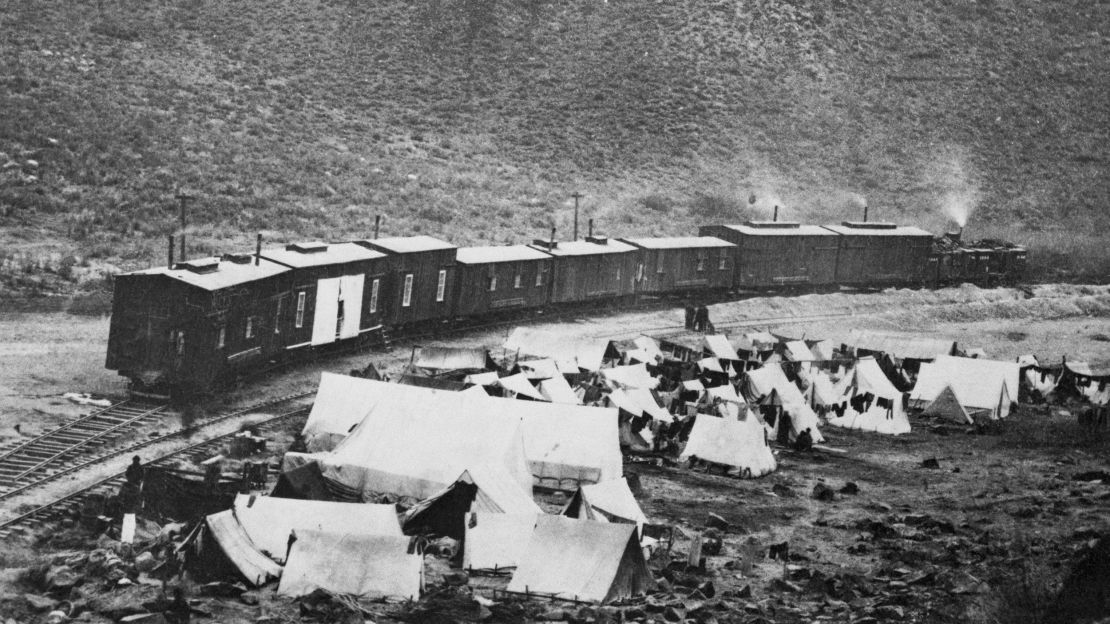
In 1882, after the construction of the Transcontinental Railroad in 1969 by mainly Chinese immigrants (AIC), the Chinese Exclusion Act prohibited the entry of Chinese laborers into the United States for 10 years, marking the first time a group of people was excluded based on their race. (National Archives)
In 1853, “Line Riders” were authorized U.S. Customs horse-mounted inspectors. They were responsible for patrolling the borderland around El Paso and New Mexico, and the U.S.-Mexican border in that region. (TSHA) The 1891 Immigration Act established the first immigration department and created classes of excludable immigrants, as well as new border enforcement procedures. (Congress Statute 26)
In 1924, Congress passed the Labor Appropriations Act of 1924, which established border patrol as part of the immigration bureau. Its purpose was to control the smuggling, concealment, or aiding of foreigners who had not been properly admitted by an immigration inspector or who did not have the legal right to enter or reside in the United States. (CBP).Note: Between 1929 and 1942, a contradiction emerged: economic demand for migrant labor coexisted with the increasing imposition of migration restrictions.
In 1929, it was declared that unlawfully entering the U.S. was a misdemeanor. This act specifically targeted Mexicans. (IH)
In 1942, the Bracero program was created. This program provided temporary agricultural visas for Mexicans. (See our explainer on Migrant Farmworkers)
In 1933, President Franklin D. Roosevelt combined the Bureau of Immigration and the Bureau of Naturalization into the Immigration and Naturalization Service. (TSHA)
In 1934, the first Border Patrol Academy opened as a training school at Camp Chigas, El Paso, in December of that year. (TSHA)
In 1981, during Ronald Reagan’s presidency, a new detention policy was created to punish and deter Latin American migration, including the detention of asylum seekers. (Washington Post)
“The 1996 Laws,” Congress expanded the list of “crimes of moral turpitude, to include non-violent drug and other previously civil charges, for which both legal immigrants and undocumented non-citizens can be subjected to mandatory detention and deportation. (LII)