
 Donar
Donar
Explainer: What Migrant Farmworkers Face Today
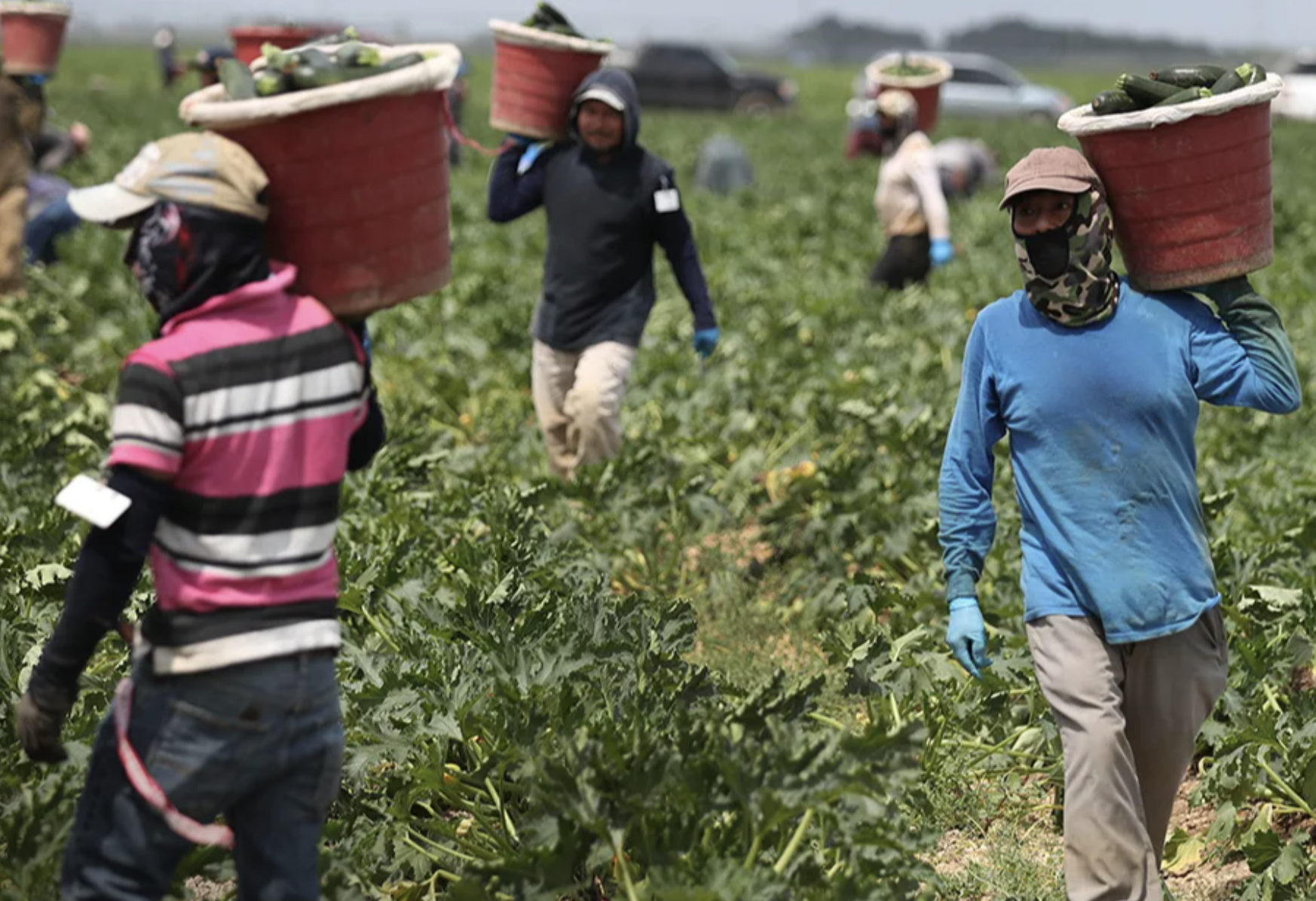
Fuente: California Legislators Say New Laws Must Protect Farmworkers From Extreme Heat
Background
Since the early history of the United States, migrant farmworkers have been crucial to the country’s history and economy. However, they have often remained in the shadows of society, forced to endure inadequate and unacceptable living and working conditions. Take the Bracero Program of the 1940s, which brought millions of Mexican laborers to U.S. fields, or the Delano Grape Strike of 1965, where workers risked everything to demand change. Farm labor has always been shaped by struggle and resilience. Today, policies such as the H-2A Temporary Agricultural Worker Program continue this long and difficult story, offering temporary visas for foreign nationals to work in U.S. agriculture, with wages and conditions that are tightly regulated (National Center for Farmworker Health, 2024; USCIS, 2025).
Who Are Today’s Migrant Farmworkers?
-
- The majority of farmworkers are men, with women making up only 26% of the workforce. The average age is 39.6 years, with 20% under the age of 25 and 39% over 44. Nearly half (48%) of farmworkers are married (Farm Labor, 2022).
- In terms of race and ethnicity, more than half (55%) are of Hispanic Mexican origin. Non-Hispanic workers include White (31%), Black (3%), and Other (4%). About 46% were born in the United States (including Puerto Rico), and 56% are U.S. citizens (Farm Labor, 2022).
- There are an estimated 20,000 Indigenous migrants from Mexico residing in California. They are often challenged by language barriers, as Indigenous languages are spoken by the majority (Primera, 2025).
- Education levels are generally low. Nearly half (44%) of farmworkers have less than a high school diploma, 33% have a high school diploma, and 22% have completed at least some college (Farm Labor, 2022).
Working the Fields Today
Farmworkers continue to face challenging conditions, although wage gaps have slowly narrowed; they persist. In 2023, the average hourly wage for workers in crop, nursery, and greenhouse jobs was $17.60, reflecting a 6.4% increase from the previous year. Farm, ranch, and aquacultural workers earned an average of $16.51 per hour, with a 3.5% increase between 2022 and 2023 (Farm Labor, 2024).
Health Risks and Hardships
- Safety and labor protocols are often disregarded, with low wages, lack of health care, and arduous work under less than adequate climatic conditions
- Persistent pesticide exposure has been associated with cancer, depression, diabetes, neurodegenerative diseases, and reproductive issues
- Lack of access to healthcare exacerbates the health risks farm workers face
- The Worker Protection Standard (WPS) is a set of federal regulations created to protect farmworkers. Before 2013, 20 years had passed without any revisions. The next revision occurred in 2015, and the last in 2024.
- Farmworkers face cultural and language barriers, along with abuse, and the continuous threat of deportation